- The IBSF
- Professional Courses
- C-Suite Program
- Reserve Banks and Treasury Programs
- Revenue Service Programs
- ICT and FINTECH Courses
- Commercial Banks & Other Financial Institutions
- Retail banking courses
- Corporate banking courses
- Investment banking courses
- Risk management courses
- Compliance and legal courses
- Banking operations courses
- Wealth management and private banking
- Loan and credit courses
- Financial management/accounting courses
- Foreign exchange and international banking
- Academic Courses
- Events
- Staff Directory

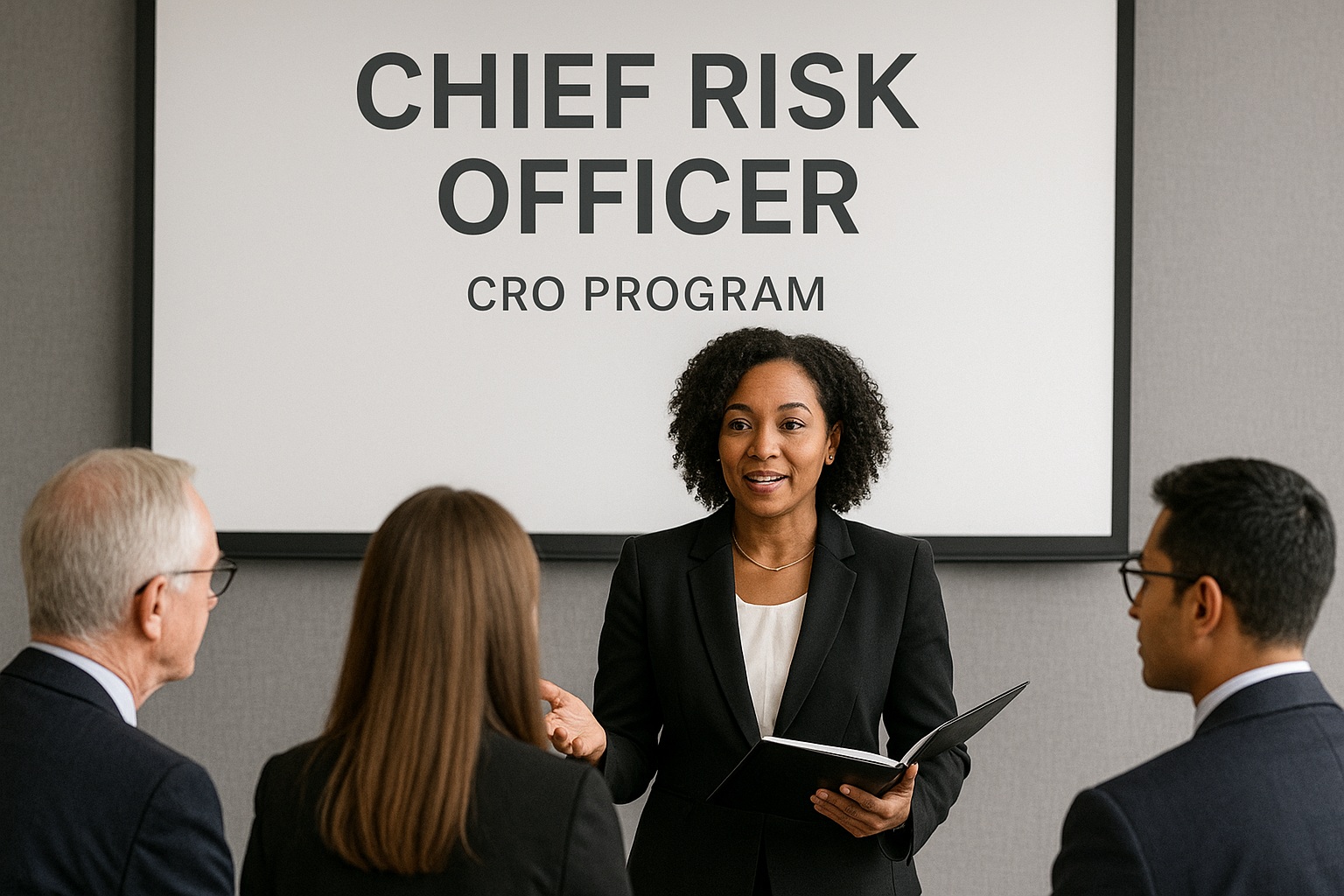
Chief Risk Officer (CRO) Program
About Course
Course Overview:
The Chief Risk Officer (CRO) Program is a comprehensive leadership course designed for senior executives responsible for managing and overseeing risk management strategies at the organizational level. This program offers in-depth training on identifying, assessing, and mitigating risks across a wide range of business functions, including financial, operational, regulatory, strategic, and reputational risks. With increasing complexity in global markets, regulatory environments, and emerging technologies, the role of the Chief Risk Officer has become more crucial than ever. This program equips participants with the knowledge and tools to lead their organizations through an increasingly uncertain and volatile business landscape, ensuring they are prepared to respond to risks effectively while seizing opportunities for growth and resilience.
The course emphasizes the integration of risk management with business strategy, focusing on how to foster a risk-aware culture, implement robust risk frameworks, and drive enterprise-wide risk management (ERM). Participants will explore case studies from various industries, providing practical insights into the challenges faced by modern risk leaders. The program also covers advanced topics like cybersecurity risk, regulatory compliance, financial risk management, and crisis leadership. Upon completion, participants will have the strategic acumen and practical skills to lead and innovate in risk management, ensuring that they can protect and enhance the value of their organizations.
Program Target Audience:
- Current Chief Risk Officers (CROs) who wish to sharpen their leadership and strategic risk management skills.
- Senior Risk Managers, Head of Risk, and Risk Officers preparing for a CRO role.
- C-suite Executives such as CEOs, CFOs, and COOs looking to strengthen their understanding of risk management at the strategic level.
- Compliance Officers, Internal Auditors, and Legal Professionals who are transitioning into broader risk management roles.
- Risk Consultants and Risk Advisors seeking to broaden their expertise and leadership capabilities in enterprise risk management.
Program Expected Outcomes:
Upon completing this program, participants will:
- Gain Advanced Risk Management Knowledge to oversee enterprise-wide risk frameworks and strategies.
- Develop the Strategic Insight to align risk management with overall business objectives, enhancing organizational resilience.
- Master Risk Identification and Assessment techniques across financial, operational, strategic, and emerging risk areas.
- Enhance Crisis Leadership Capabilities to lead the organization effectively during crises, mitigating damage and maintaining business continuity.
- Implement Risk Mitigation and Response Plans that protect the organization from identified risks while enabling the achievement of strategic goals.
- Strengthen Governance and Compliance Practices, ensuring alignment with legal, regulatory, and industry standards.
- Leverage Technology such as data analytics, artificial intelligence, and blockchain for more effective risk identification and mitigation.
Key Takeaways:
- Enterprise Risk Management (ERM): Develop the skills to design and implement
comprehensive risk management strategies that span all areas of an organization. - Strategic Risk Leadership: Learn how to incorporate risk management into business decision making and align risk strategy with business goals.
- Crisis Management: Strengthen your ability to lead through crises, ensuring organizational resilience and rapid recovery.
- Regulatory and Compliance: Understand the complex landscape of global regulations and how to ensure compliance in an increasingly stringent environment.
- Cybersecurity Risk: Gain insights into managing cyber risk and data security as key components of modern enterprise risk.
- Technology in Risk Management: Learn how to use emerging technologies like AI, big data, and machine learning for proactive risk identification and management.
Key Instructors:
The CRO Program is delivered by a combination of experienced Chief Risk Officers, senior risk management professionals, regulatory experts, and thought leaders in the field of risk management.
These instructors have extensive experience in leading risk management strategies at large multinational corporations, handling financial and operational crises, and driving enterprise-wide risk culture initiatives. They bring real-world insights, case studies, and actionable strategies that participants can apply in their own organizations.
Program Duration and Delivery:
- Duration: 3-6 months (Flexible options for full-time or part-time enrollment)
- Delivery Format: Hybrid (Online learning modules with in-person workshops, case studies,peer discussions, and expert-led seminars)
- Certification: Participants will receive a Chief Risk Officer Leadership Certificate upon successful completion of the program.
The Chief Risk Officer (CRO) Program is designed for senior risk management professionals aiming to advance their leadership skills and strategic thinking in managing organizational risks. With a focus on integrating risk management into business strategy, enhancing crisis leadership capabilities, and leveraging emerging technologies, the program prepares participants to become influential risk leaders.
Course Content
Module 1: The Role of the CRO and Risk Management Frameworks
-
Unit 1.1: Understanding the Evolving Role of the CRO
-
Unit 1.2: Integrating Risk Management with Business Strategy
-
Unit 1.3: Building a Risk-Aware Organizational Culture
-
Unit 1.4: Developing Enterprise-Wide Risk Management Frameworks
-
Unit 1.5: Key Risk Indicators and Metrics for the CRO