

Board Leadership in Strategic Decision Making and Risk Management
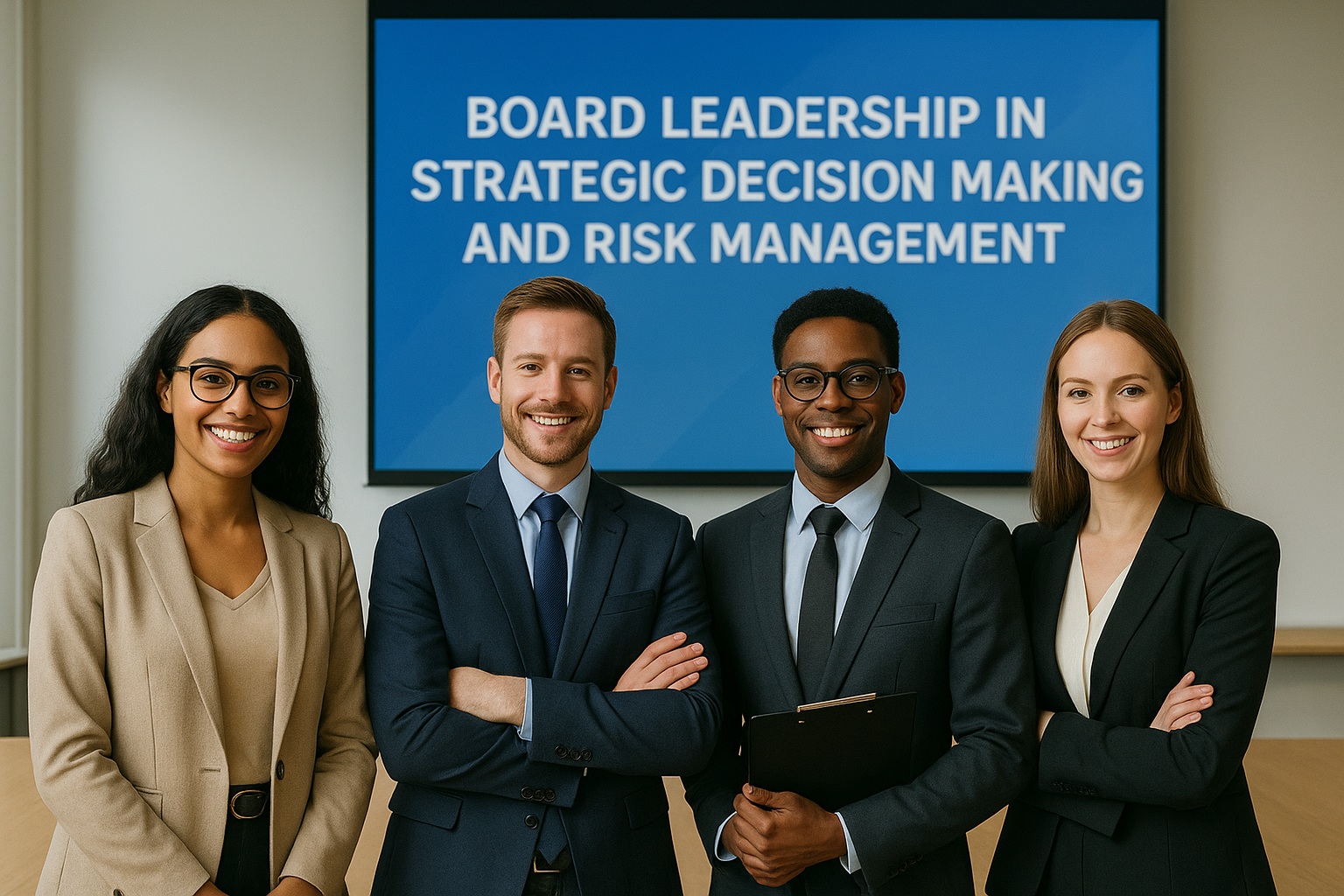
About Course
This course is designed for current and aspiring board members, C-suite executives, and senior managers who wish to deepen their understanding of strategic decision-making and risk management at the board level. The course focuses on how board leaders can effectively guide their organizations through complex strategic challenges while mitigating risks and ensuring long-term sustainability. The curriculum blends theoretical insights with practical applications, leveraging case studies, interactive simulations, and expert discussions. Upon completion, participants will have enhanced their ability to provide high-level governance, manage risk, and make sound strategic decisions that drive organizational success.
Course Expected Outcomes:
By the end of this course, participants will be able to:
1. Strategically Navigate Complex Decision-Making: Understand how boards influence and guide key strategic decisions, while balancing short-term and long-term organizational goals.
2. Enhance Risk Management Frameworks: Develop, implement, and monitor effective risk management practices and policies at the board level.
3. Foster Organizational Alignment: Facilitate alignment between the board, executive team, and stakeholders on strategic objectives and risk appetite.
4. Cultivate Leadership in Crisis: Build the ability to lead organizations through crisis situations and uncertainties while minimizing financial, reputational, and operational risks.
5. Enhance Governance Practices: Strengthen governance structures and enhance board effectiveness by applying best practices in risk oversight and strategic decision-making.
Course Structure:
The course is delivered over 10 modules, each with a set of units and practical applications. The overall duration of the course is typically 10-12 weeks, with both synchronous and asynchronous components.
Key Takeaways:
1. Strategic Acumen: An understanding of how to craft and evaluate strategies with an eye on potential risks and the long-term success of the organization.
2. Risk Management Competence: Skills in setting up, monitoring, and overseeing an effective risk management system.
3. Governance Insight: A deeper appreciation for the board’s role in governance, ethical leadership, and creating a sustainable culture.
4. Crisis Leadership: Competence in decision-making under crisis conditions and understanding how to guide the organization through periods of uncertainty.
5. Stakeholder Alignment: The ability to identify, manage, and balance the interests of key stakeholders while staying true to the organization’s mission and values
Course Delivery Format:
Synchronous Webinars: Live sessions with instructors and guest speakers. Asynchronous Learning: Pre-recorded lectures, reading materials, and self-assessment quizzes.
Case Studies: In-depth analysis of real-world examples and boardroom decision-making scenarios.
Peer Discussions: Group projects and forums to facilitate peer-to-peer learning. Capstone Project: A final project synthesizing all modules, focusing on a specific board-level decision-making challenge or risk management strategy.
This course will provide a solid foundation for board leaders to manage organizational risks effectively while making strategic decisions that propel their organizations toward long-term success.
Key Topics: Technological advances, ESG (Environmental, Social, and Governance) risks, future proofing the organization.
Key Takeaways:
- Strategic Acumen: An understanding of how to craft and evaluate strategies with an eye on potential risks and the long-term success of the organization.
- Risk Management Competence: Skills in setting up, monitoring, and overseeing an effective risk management system.
- Governance Insight: A deeper appreciation for the board’s role in governance, ethical leadership, and creating a sustainable culture.
- Crisis Leadership: Competence in decision-making under crisis conditions and understanding how to guide the organization through periods of uncertainty.
- Stakeholder Alignment: The ability to identify, manage, and balance the interests of key stakeholders while staying true to the organization’s mission and values
Course Delivery Format:
- Synchronous Webinars: Live sessions with instructors and guest speakers.
- Asynchronous Learning: Pre-recorded lectures, reading materials, and self-assessment quizzes.
- Case Studies: In-depth analysis of real-world examples and boardroom decision-making scenarios.
- Peer Discussions: Group projects and forums to facilitate peer-to-peer learning.
- Capstone Project: A final project synthesizing all modules, focusing on a specific board-level decision-making challenge or risk management strategy.
This course will provide a solid foundation for board leaders to manage organizational risks effectively while making strategic decisions that propel their organizations toward long-term success..
Course Content
Introduction to Board Leadership in Strategic Decision Making
-
Unit 1.1: Overview of the Role of the Board in Strategy
-
Unit 1.2: The Evolution of Governance and Risk Oversight
-
Unit 1.3: The Anatomy of High-Performing Boards