Chief Operating Officer (COO) Program
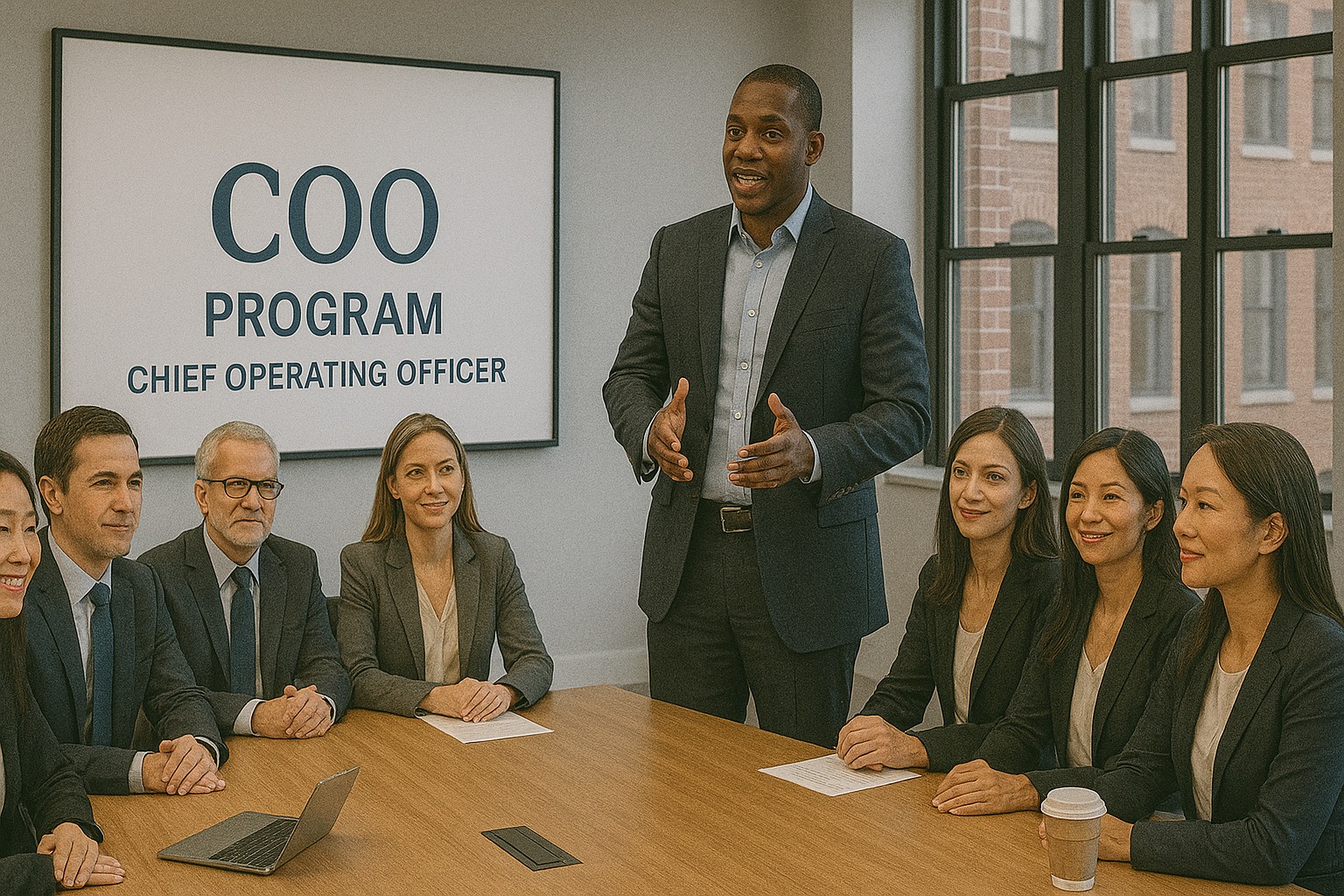
About Course
Course Overview:
The Chief Operating Officer (COO) Program is an executive-level leadership development course designed for senior operations professionals and individuals aspiring to take on the role of COO. This program focuses on equipping participants with the advanced operational skills and strategic vision required to lead organizations efficiently and drive business growth. By delving into critical areas such as operations strategy, performance management, supply chain optimization, organizational design,
and change management, the program prepares participants to oversee day-to-day operations and streamline processes in line with broader business goals. The program also emphasizes the importance of collaboration across departments, managing resources effectively, and enhancing overall organizational performance in an increasingly dynamic business environment.
Participants in the COO Program will learn how to build and scale operational frameworks that align with strategic objectives, drive innovation, and deliver sustainable results. The program integrates theory with practical case studies, allowing participants to engage in discussions with experienced COOs, gaining valuable insights into real-world challenges and solutions. Additionally, the program covers emerging trends in technology and digital transformation, helping participants understand how to leverage technology to enhance operational efficiency. By the end of the program, participants will be equipped to lead operational transformations and effectively manage complex organizational systems to ensure long-term success.
Program Target Audience:
- Current and Aspiring COOs looking to enhance their leadership skills and broaden their strategic perspective.
- Senior Operations Executives (VPs, Directors of Operations, Heads of Operations) who aspire to move into the COO role.
- Business Executives responsible for managing operational teams, supply chain, and organizational performance.
- Entrepreneurs and Business Owners looking to refine their operational strategies and improve business efficiencies.
- Leaders in Change Management, Process Optimization, or Supply Chain Management seeking to enhance their strategic influence within their organizations.
Program Expected Outcomes:
By the end of this program, participants will:
- Master Operational Strategy, with the ability to develop and implement efficient processes that align with organizational goals.
- Enhance Leadership and Team Management Skills, enabling them to build and lead high performance operational teams.
- Drive Organizational Performance by optimizing operational systems, improving
productivity, and delivering measurable results. - Leverage Technology and Innovation to transform operational processes and improve efficiency.
- Develop Strong Change Management Capabilities, leading the organization through transformations and adapting to evolving market conditions.
- Align Operations with Corporate Strategy, ensuring that day-to-day operations support broader business objectives.
Key Takeaways:
- A strategic understanding of the COO’s role in leading operations and aligning them with organizational goals.
- Techniques for optimizing supply chains, manufacturing processes, and service delivery.
- Advanced problem-solving and decision-making skills that lead to enhanced business performance.
- In-depth knowledge of performance management, key performance indicators (KPIs), and continuous improvement techniques.
- Leadership skills to inspire and manage cross-functional teams, ensuring seamless collaboration across the organization.
- Understanding of digital transformation and how to leverage technology to drive operational efficiency.
- Strategies to navigate change and build agile, resilient operations that adapt to market shifts.
Key Instructors:
The COO Program will be led by experienced COOs, senior operations consultants, and industry experts who bring a wealth of knowledge and practical experience to the program. These instructors have held leadership roles across various sectors including manufacturing, technology, retail, healthcare, and service industries. Their insights will provide participants with actionable strategies and real-world solutions for managing complex operational challenges.
Program Duration and Delivery:
- Duration: 3-6 months (Flexible options for full-time or part-time enrollment)
- Delivery Format: Hybrid (Online learning combined with in-person workshops, peer networking opportunities, and real-world case studies)
- Certification: Participants will receive a Chief Operating Officer Leadership Certificate upon successful completion of the program.
The COO Program is designed to provide current and aspiring COOs with the tools, knowledge, and leadership skills necessary to effectively manage and transform operations in today’s complex business environment. By focusing on strategic operational leadership, change management, digital transformation, and performance optimization, participants will be empowered to drive significant improvements within their organizations and position themselves for long-term success in the COO role. Through a combination of strategic frameworks, real-world case studies, and leadership exercises, the program prepares future operational leaders to manage and execute operational strategies that lead to business growth and sustainable results.
Course Content
Module 1: The Evolving Role of the COO
-
Unit 1.1: The Strategic Role of the COO in the C-Suite
-
Unit 1.2: Collaborating with the CEO, Board, and Other Departments
-
Unit 1.3: Defining Operational Excellence in a Globalized Economy
-
Unit 1.4: Operational Leadership vs. Traditional Management
-
Unit 1.5: The COO’s Role in Business Growth and Transformation
Module 2: Operational Strategy and Business Alignment
Module 3: Leadership and Team Management
Module 4: Supply Chain and Operations Management
Module 5: Change Management and Organizational Transformation
Module 6: Technology in Operations
Module 7: Operational Risk Management
Module 8: Financial Management for COOs
Module 9: Performance Management and Continuous Improvement
Module 10: The Future of Operations and the COO’s Role
Student Ratings & Reviews